Here are two links to different websites I found which useful when researching various roles within the media industry.
Job roles within the media industry.
Film Jobs
Director
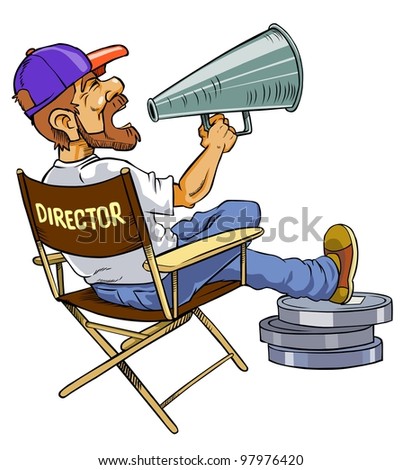
The director has one of the main roles as they have to work with the different departments and they also help to translate the script to a film on screen. The typical activities of a director contain elements such as; interpreting the script; developing storyboards; directing actors; managing technical details; making decisions about location and design. Directors also have to take into consideration budgets and schedules.

The editor is responsible for assembling raw material into a finished product suitable for the target audience, this is one of the most crucial elements of film making. The material they work with may consist of unedited camera footage, dialogue, sound effects, graphics and special effects. During editing they make sure that the story is put together correctly which is then assembled to become the finished film. The editor may be part of a team and they usually work closely with the director to achieve the desired end result.
 Lighting
The lighting department is an important role as part of a film set and production. There is natural lightening such as the sun but artificial lighting is often required to create a specific genre or atmosphere within the film. To carry out a role in the lighting department all workers are required to work safely with electricity and all the other obvious potential dangers. Jobs within the sound department include; moving light operator, director of photography and lighting technician.

Boom Operator/ Sound Department
Recording all sound on set or on location is the work of the Production Sound Crew which includes Production Sound Mixers, Boom Operators, and Sound Assistants; on bigger films, Sound Trainees may also be employed. Although film is considered a primarily visual medium, much of the storytelling and emotional resonance of a script is conveyed through dialogue. Ensuring that the dialogue recorded during film shoots is suitably clear is a complex job; most film sets are challenging for the Sound Department as there are often unwanted noises to deal with, or the desired camera shots hamper the placing of microphones. Boom Operators are responsible for placing the microphone in the correct position were ever the best sound for the shot is. They need to do this without interrupting the camera operators or distracting the actors from their performance. The microphones are placed near the actors whilst they are saying their lines as clear dialogue is needed for film, making this a very important job. Boom Operators also assist the production sound mixer as these jobs work along side one another.
 Camera
Good cinematography involves the creation of beautiful and/or arresting images on screen; it can also tell us more about a character or a location than any amount of dialogue or music. Shot composition, camera movement and the way a Director of Photography chooses to manipulate light and shade, all combine to create each film's unique photographic signature. A great deal of thought, preparation and hard work is involved in moving and operating cameras in ways that enhance, and do not detract from, what is happening on screen. Camera crews work with extremely delicate, expensive equipment and are amongst the most highly skilled practitioners on any film crew. They work closely together to create seemingly invisible camera moves.

The location managers' main role is to find suitable locations for the directors vision. They do a lot of research including calculating the costs of hiring and shooting on the chosen set/location, this role starts once the filming has begun therefore it is busy for them as they have to be on the set to make sure the location is fine for the director. They also begin negotiations over contracts and fees for the location working within the budget the director gave them. They also have to look after the shoot once the filming has finished because they need to ensure that the location is securely locked as well as clean before they return it to the owners.
Producer
Producers are a main part of the production office, producers have overall control on every aspect of a film's production, bringing together the screenwriter, director, cast, finances and production team, as responsible for these different elements it means that producers are ultimately accountable for a successful film.
 Art Department
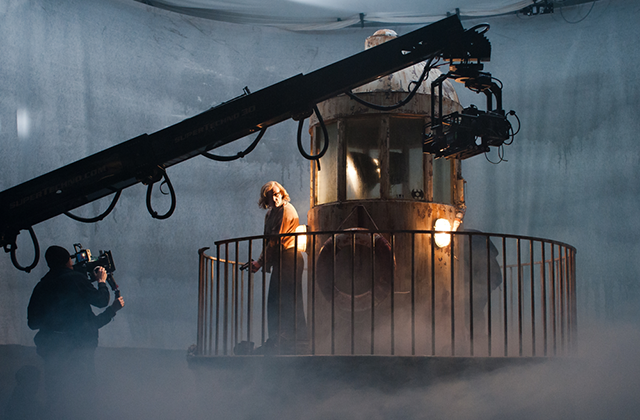
Films can be located anywhere; creating the visual world or setting for a film is the role of the Art Department. The look of sets or locations transports audiences into the world of the story, and is an essential element in making films convincing and evocative. These settings are rarely left to chance by film makers; a great deal of work and imagination goes into constructing appropriate backdrops to any story. The Art Department usually employs the largest number of people on any film crew. On big budget fantasy, period drama or sci-fi films, the Art Department Offices, and Drawing and Construction Studios can occupy a vast area and employ hundreds of talented people.
 Every department is important when creating a film - of any size, and departments have to be able to work together well to create a successful film. The director and his team of assistants will work with every department so they are able to know about how certain aspects of the film are coming along, for example talking to the actors and making sure they are happy or talking to the location manager and making sure a location is available to use on the needed date. The camera department will work with the sound department as they will need to organise with the boom operator where the boom will go when filming so that it is not in shot and also so that the sound department can get the best quality dialogue for the scene they are shooting. The camera department will also work with the lighting department to make sure the correct atmosphere is being portrayed onto the screen, this is important as the lighting is crucial whilst creating a certain genre. Camera and lighting come under the same department and because film is predominantly a visual medium, the camera department works with all the majority of departments in order to have the best possible results achieved, these departments include costume, make-up and props.
 Due to there only being four of us every member of my group will need to make sure they are able to take on large tasks on their own as there are a lot of jobs to do for just four people. By dividing up the jobs equally and working together we should hopefully avoid any delegation or low signs of progress from any member of our group. Good team work will be needed to create a successful short film and by playing on peoples strengths and by helping one another with improving our skill base we should hopefully create a really good short film.
No comments:
Post a Comment