Below is a prezi project I created, I answered the question using prezi as I found it easier to read as well as it provided me with the chance to show off some of the new skills I had learnt whilst using a range of new media technology.
Sunday, 24 February 2013
Post 24: Evaluation Questions & Tasks (Question 4 : New Media technologies)
Question 4- How did you use new media technologies in the construction and research, planning and evaluation stages?
Below is a prezi project I created, I answered the question using prezi as I found it easier to read as well as it provided me with the chance to show off some of the new skills I had learnt whilst using a range of new media technology.
Below is a prezi project I created, I answered the question using prezi as I found it easier to read as well as it provided me with the chance to show off some of the new skills I had learnt whilst using a range of new media technology.

Saturday, 23 February 2013
Post 24: Evaluation Questions & Tasks (Question 3: Audience Feedback)
Question 3 - What have you learned from your audience feedback?
To find out if my target audience would respond well to our film I carried out an audience questionnaire involving a mixed age group. I showed them our film then proceeded to ask them the questions straight after.
The questions asked were;
-What was your initial reaction to the film
-What do you think of the use of music? (In the Montages, used as background noise and during the opening sequence.)
-What did you think about the use of montages?
-How did you react to this topic?
-Did you find the characters believable? (Was the twist realistic)
-How effective do you think the ending is?
-Who do you think the target audience would be?
-What improvements would you like to see?
Receiving the feedback from our target audience was beneficial as I was able to understand what parts of our short film effected our target audience the most and also what they would change. I believe after hearing their feedback we did a very good job creating our characters and making the storyline believable, I think we also used the music correctly and effectively to create the desired atmosphere. I think the audience feedback my group and I have received throughout our short film has been beneficial to us -especially from Dudi Appleton, as it has caused us to change some of our film to appeal to the audience more as well as create a clearer and more realistic film. If I had the chance to create our short film again I believe I would pay more attention to the lighting and make sure we always had clear sound levels throughout the film as well as focus on the quality of some shots - the text messages, as these were the main flaws I received during audience feedback.
To find out if my target audience would respond well to our film I carried out an audience questionnaire involving a mixed age group. I showed them our film then proceeded to ask them the questions straight after.
The questions asked were;
-What was your initial reaction to the film
-What do you think of the use of music? (In the Montages, used as background noise and during the opening sequence.)
-What did you think about the use of montages?
-How did you react to this topic?
-Did you find the characters believable? (Was the twist realistic)
-How effective do you think the ending is?
-Who do you think the target audience would be?
-What improvements would you like to see?
Receiving the feedback from our target audience was beneficial as I was able to understand what parts of our short film effected our target audience the most and also what they would change. I believe after hearing their feedback we did a very good job creating our characters and making the storyline believable, I think we also used the music correctly and effectively to create the desired atmosphere. I think the audience feedback my group and I have received throughout our short film has been beneficial to us -especially from Dudi Appleton, as it has caused us to change some of our film to appeal to the audience more as well as create a clearer and more realistic film. If I had the chance to create our short film again I believe I would pay more attention to the lighting and make sure we always had clear sound levels throughout the film as well as focus on the quality of some shots - the text messages, as these were the main flaws I received during audience feedback.
Friday, 22 February 2013
Post 24: Evaluation Questions & Tasks (Question 2: Combination of main product and ancillary texts)
Question 2 - How effective is the combination of your main product and ancillary texts?


 The two screen grabs from our short film features both of our main characters alone. I believe this to be an important point as we produced a poster featuring a face made up of a man and woman that was based around the looks of both Sammi and Connor. By having both sexes photograph in the poster it reveals they are on equal level of importance in the film. It also could attract a larger audience due to their wanting to find out the real characters and the relationship they have. I find the poster to work effectively with the film as it entices the audience to come and find out more about the main characters, it also hints at the importance of the male within the film.

 The screen grab to the left I believe shows exactly how well the short film and review combined was very effective and powerful for audiences. The photo is the dominate feature in the review as it features both main characters (like the poster featured both sexes), also because it takes up such a large amount of space in the review it is the first thing our audience see. I believe the review gives a detailed description of the film without giving the cliffhanger away, it has an enticing photograph from the short film so I believe this would grab an audience interest.
Overall I believe the combination of our main product and ancillary texts were very effective and would grab audiences interests. Behind Blue Eyes - which the audience would recognise and remember due to the name appearing large and bold throughout every piece in an interesting text, I believe our group has advertised well and when I asked for my target audiences opinion about the combination I received positive feedback only criticising the lack of actors real faces in the poster. They said they liked how the review had an interesting screen grab from the film and how both the review and poster feature both a male and female. The only changes I would make if possible would be to incorporate our actors into the poster, however I believe the rest of the information and projects work well together.


 The two screen grabs from our short film features both of our main characters alone. I believe this to be an important point as we produced a poster featuring a face made up of a man and woman that was based around the looks of both Sammi and Connor. By having both sexes photograph in the poster it reveals they are on equal level of importance in the film. It also could attract a larger audience due to their wanting to find out the real characters and the relationship they have. I find the poster to work effectively with the film as it entices the audience to come and find out more about the main characters, it also hints at the importance of the male within the film.
 The screen grab to the left I believe shows exactly how well the short film and review combined was very effective and powerful for audiences. The photo is the dominate feature in the review as it features both main characters (like the poster featured both sexes), also because it takes up such a large amount of space in the review it is the first thing our audience see. I believe the review gives a detailed description of the film without giving the cliffhanger away, it has an enticing photograph from the short film so I believe this would grab an audience interest.
Overall I believe the combination of our main product and ancillary texts were very effective and would grab audiences interests. Behind Blue Eyes - which the audience would recognise and remember due to the name appearing large and bold throughout every piece in an interesting text, I believe our group has advertised well and when I asked for my target audiences opinion about the combination I received positive feedback only criticising the lack of actors real faces in the poster. They said they liked how the review had an interesting screen grab from the film and how both the review and poster feature both a male and female. The only changes I would make if possible would be to incorporate our actors into the poster, however I believe the rest of the information and projects work well together.
Post 24: Evaluation Questions & Tasks (Question 1: Our Media Product vs. Real Media Products)
Question 1 - In what ways does your media product use, develop or challenge forms and conventions of real media products?
SHORT FILM


Above are sixteen screen grabs from my film, they have been numbered and below explains what is happening in each shot and if it develops or challenges the conventions of real media.
1. The production companies name is featured in the opening credits, this is conventional as in real media products they often have the production companies name at the beginning of the film.
2. This shot shows the main character interacting with a close friend, this is conventional as it shows the audience the main character, their importance and also how they act towards others.
3. This shot shows an example of one of the many fades within our short film, this is conventional in short films as fades are used to help move from one scene to the other.
4.This shot shows the main character interacting with the antagonist, this is conventional as in real media products they establish the bad guy and how the protagonist interacts with them.
5. This shot shows the relationship between the protagonist and antagonist develop during a montage, this allows the audience to see the time scale of the grooming. This is not conventional in most films as you don't often have such a strong storyline with the main character being seduced by the villain.
6. Shows the same as number 5.
7. This shot shows how close Sophie and Alan's relationship is through the use of body language. This is conventional as body language helps to make the dialogue more realistic as well as suggest something because of how close they are.
8. This shot shows a close up of the characters movements, this is conventional in films as they often have cutaways to point out key points within the film.
9. Once again a close up showing the characters movements suggesting the relationship between the main actors. As well as pointing out the key points within the film.
10. This shot features the main character Alan, it is a medium close up to show his facial expression. This is conventional as medium close ups are often used in films for the audience to see the characters reaction.
11. A calm quiet medium shot that gets interrupted by a critical turning point in the film. Alan proceeds to get arrested which is the build up to the end scene. This is conventional as there is usually large build ups in real media products to create tension for the audience.
12. Shows the same as number 11 however is a closer shot.
13. This shot reveals the policeman waiting for Alan outside his door. This shot is conventional as films often introduce new characters to the audience through a different shot not always including the main character.
14. A close up of Alan being handcuffed, this is a key shot to the audience as it shows the use of an important prop. This is conventional as real media products cut away to a close up of an important subject matter.
15. Medium close up of Alan being put into the police car and being escorted to the station, this is conventional as the police car helps make the police more realistic for the audience which often happens in films as dramas often try to stay as true to the truth as possible.
16. The final shot is of Alan being interviewed, this is where we leave the film on a cliff hanger which is conventional in real media products as it leaves the audience confused, interested and wanting more.
POSTER
 1. The film title is bold, clear and obvious to the audience. This is conventional to real media products as whilst marketing and advertising it is essential to have the name of the film on all the advertising.
2. It is conventional for the poster to include some of the credits of the film. With information such as production companies, actors names, screenplay writers and directors. The credits are also usually placed on the bottom of a poster, we tried to keep it as conventional as possible.
3. The tagline of the film is a rhetorical question for the audience which will make them think and question the film. This is a convention of real media products as they often include taglines that entice the audience.
4. A QR Code has been included, this is becoming more conventional for full length films though it is increasingly popular with short films. It allows the audience to receive more information about the film which they would otherwise not know about.
5.It is conventional for there to either be a coming soon or release date on a film poster. It is seen more often in full length films then short film posters however ours was based more on a full length film.
FILM REVIEW
 1. There is a screen grab containing two of the main characters from the film taking up a large portion of the article. This is conventional as it allows the audience to get a sense of the film as well as the actors in it.
2. There is a clear and bold title, this is conventional as it allows the audience to easily identify the film.
3. There is a verdict from the critic, include a star rating. This is conventional as there are often verdicts from the reviewer.
4. This shows the basic information the audience will need often the most vital being the certificate or for some audience members the cast. This is conventional as if the audience like what they read here they will continue to read the article.
5. Here is a subtitle that gives a slight hint to the audience what the film is about. This is conventional as it entices the audience to read the review and find out what the subtitle meant.
6. The boarder features an "INCINEMAS" which tells the audience that this film is currently available in cinemas. This is conventional as magazines often keep up to date with the latest movie, especially Empire.
I believe all the ancillary items I created both challenged and met the conventions of typical media products as well as create the right feel for our genre of drama/ social realism. I found it was important to create a generic look and feel to both the poster and magazine article. Between the poster and film I used the same font for the title "Behind Blue Eyes" which helped build an overall sense of brand that the audience would recognise, this is conventional as it would help promote the film further if audience's recognised the title and font. I however didn't change the font of the title in the magazine article as I tried to keep the convention of an article in Empire magazine. I was conventional with my poster and magazine article as it included a photo of what you assume to be the main characters, the poster goes against the typical conventions of a film poster as it does not include the main characters photographs. Overall I believe I stuck to the usual conventions of a film poster and magazine article, making sure to keep to the same structure and incorporate similar elements as real media products. I believe this helped us to create a generic look and feel to the three projects which provided an overall sense of brand.
SHORT FILM
Above are sixteen screen grabs from my film, they have been numbered and below explains what is happening in each shot and if it develops or challenges the conventions of real media.
1. The production companies name is featured in the opening credits, this is conventional as in real media products they often have the production companies name at the beginning of the film.
2. This shot shows the main character interacting with a close friend, this is conventional as it shows the audience the main character, their importance and also how they act towards others.
3. This shot shows an example of one of the many fades within our short film, this is conventional in short films as fades are used to help move from one scene to the other.
4.This shot shows the main character interacting with the antagonist, this is conventional as in real media products they establish the bad guy and how the protagonist interacts with them.
5. This shot shows the relationship between the protagonist and antagonist develop during a montage, this allows the audience to see the time scale of the grooming. This is not conventional in most films as you don't often have such a strong storyline with the main character being seduced by the villain.
6. Shows the same as number 5.
7. This shot shows how close Sophie and Alan's relationship is through the use of body language. This is conventional as body language helps to make the dialogue more realistic as well as suggest something because of how close they are.
8. This shot shows a close up of the characters movements, this is conventional in films as they often have cutaways to point out key points within the film.
9. Once again a close up showing the characters movements suggesting the relationship between the main actors. As well as pointing out the key points within the film.
10. This shot features the main character Alan, it is a medium close up to show his facial expression. This is conventional as medium close ups are often used in films for the audience to see the characters reaction.
11. A calm quiet medium shot that gets interrupted by a critical turning point in the film. Alan proceeds to get arrested which is the build up to the end scene. This is conventional as there is usually large build ups in real media products to create tension for the audience.
12. Shows the same as number 11 however is a closer shot.
13. This shot reveals the policeman waiting for Alan outside his door. This shot is conventional as films often introduce new characters to the audience through a different shot not always including the main character.
14. A close up of Alan being handcuffed, this is a key shot to the audience as it shows the use of an important prop. This is conventional as real media products cut away to a close up of an important subject matter.
15. Medium close up of Alan being put into the police car and being escorted to the station, this is conventional as the police car helps make the police more realistic for the audience which often happens in films as dramas often try to stay as true to the truth as possible.
16. The final shot is of Alan being interviewed, this is where we leave the film on a cliff hanger which is conventional in real media products as it leaves the audience confused, interested and wanting more.
POSTER

2. It is conventional for the poster to include some of the credits of the film. With information such as production companies, actors names, screenplay writers and directors. The credits are also usually placed on the bottom of a poster, we tried to keep it as conventional as possible.
3. The tagline of the film is a rhetorical question for the audience which will make them think and question the film. This is a convention of real media products as they often include taglines that entice the audience.
4. A QR Code has been included, this is becoming more conventional for full length films though it is increasingly popular with short films. It allows the audience to receive more information about the film which they would otherwise not know about.
5.It is conventional for there to either be a coming soon or release date on a film poster. It is seen more often in full length films then short film posters however ours was based more on a full length film.
FILM REVIEW

2. There is a clear and bold title, this is conventional as it allows the audience to easily identify the film.
3. There is a verdict from the critic, include a star rating. This is conventional as there are often verdicts from the reviewer.
4. This shows the basic information the audience will need often the most vital being the certificate or for some audience members the cast. This is conventional as if the audience like what they read here they will continue to read the article.
5. Here is a subtitle that gives a slight hint to the audience what the film is about. This is conventional as it entices the audience to read the review and find out what the subtitle meant.
6. The boarder features an "INCINEMAS" which tells the audience that this film is currently available in cinemas. This is conventional as magazines often keep up to date with the latest movie, especially Empire.
I believe all the ancillary items I created both challenged and met the conventions of typical media products as well as create the right feel for our genre of drama/ social realism. I found it was important to create a generic look and feel to both the poster and magazine article. Between the poster and film I used the same font for the title "Behind Blue Eyes" which helped build an overall sense of brand that the audience would recognise, this is conventional as it would help promote the film further if audience's recognised the title and font. I however didn't change the font of the title in the magazine article as I tried to keep the convention of an article in Empire magazine. I was conventional with my poster and magazine article as it included a photo of what you assume to be the main characters, the poster goes against the typical conventions of a film poster as it does not include the main characters photographs. Overall I believe I stuck to the usual conventions of a film poster and magazine article, making sure to keep to the same structure and incorporate similar elements as real media products. I believe this helped us to create a generic look and feel to the three projects which provided an overall sense of brand.
Thursday, 21 February 2013
Post 23: Final Products
Here is my completed short film Behind Blue Eyes which was created using Premier Pro.
Here is the poster my group and I created for Behind Blue Eyes which was created using Photoshop. The initial photograph was done by the group however I changed the font and added a QR Code - which goes straight to my blog, as I believe it makes the poster look more professional. I also changed the hue and saturation to make the skin tones blend well together.
Here is my film review for Behind Blue Eyes I created using Photoshop.
Below is what was written in the review.
Easily mislead teenager Sophie is left lonely and screaming for help, her saviour isn't as innocent as first thought and soon captures her in a web of mistrust and confusion. Can you really trust those closest to you?
Instantly hypnotizing, Behind Blue Eyes takes its audience’s hands and leads them through a sinister and realistic storyline of mistrust and lost innocence. Sophie – played by up and coming British talent Sammi Lovell, is struggling to find clarity in the life she has been dealt. Pressures coming from various aspects of her life, it is no wonder that at the first sign of compassion and kindness she receives she is unwillingly to let that person slip away.
Behind Blue Eyes writer Alexandra Mullins known for short film comedy ‘The Interview’ has worked closely with the director to produce a realistic and spine chilling short film that leaves the audience questioning their own lives. Behind Blue Eyes follows in the footsteps of “Lolita” (1962) directed by Stanley Kubrick, a story about sexual grooming and “Hard Candy” (2005) directed by David Slade, where a teenage girl tries to expose a paedophile British director Katie-Mai Taylor was said to have used such films as inspiration when it comes to the relationship between the groomer and victim, throughout the film you appear to be questioning if the groomer is even in the wrong. Hard Candy and Lolita have a similar plot line to Behind Blue Eyes with all three focusing on the subject of child abuse however all of them are focusing on various points of view and ways of looking and dealing with the abuse. Hard Candy is full of twists which have the audience questioning if the groomer is really a groomer, Lolita however is told from the groomer’s point of view which adds to the discomfort of the audience as they start to believe he is right. Behind Blue Eyes, like Lolita, is told from the groomer’s point of view receiving sympathy from the audience against their will, yet like Hard Candy it is also full of surprises for the audience as they internally question Alan’s innocence.
Sammi Lovell is a new talent to British films, yet from her performance in Behind Blue Eyes it is clear that she has a long career ahead of her. She is able to capture the innocence of Sophie yet portray a femme fatale when it comes to being Alan’s downfall; she is able to appear as both the weak victim as Sophie is groomed, as well as a powerful weapon when Alan is arrested. Connor Janes, no stranger to short films, once again delivers an impressive performance that captures the audience’s attention that both entrances and terrifies them. Connor Janes takes a step back from his usual heartthrob role and plays the groomer a transformation that he does remarkably well. Sarah Roberts plays the role of Paige, though a new talent to the screen she is definitely able to steal some of the limelight from her co-stars, appearing as a naive and helpful best friend to Sophie she grabs the attention from audiences with her childlike innocence and impressive acting.
Behind Blue Eyes is rumoured to have been named after English Rock band The Who’s Behind Blue Eyes lyrics from 1971. “No one knows what it’s like, to be the bad man, to be the sad man. Behind blue eyes.” However the lyrics were just a happy coincidence due to the fact that they fit into the story. The reason for the title was later confirmed by producer Bobbi Rhodes who admitted that they were constantly changing the titles name anything from; Trapped, Forgotten, and Alone. Yet after casting it was noted how all the actors had blue eyes which influenced the final decision for the title.
Lolita uses lighting to enhance the atmosphere due to it being film noir which helps show Lolita as a femme fatale. Taylor has clearly used the same style as Stanley Kubrick to enhance the character Sophie’s personality and add to the already impressive acting talent of Sammi Lovell. Lighting was also shown to be a powerful tool when it came to making Alan appear secretive and mysterious, by using casting and attached shadows she was able to create an eerie feel for audiences. The editing of the film changes as it features montages; the montage usually appears with a backing track to enhance the mood further.
The montages in Behind Blue Eyes show the relationship between Alan and Sophie form and explain to the audience exactly how long the grooming has been going on for, with a sinister violin being played as the images appear on screen, the audience are left shocked by the sudden revelation of how short a time it takes to groom someone. The opening title sequence instantly pulls the attention of the audience by hinting at the realistic and somewhat eerie undertone of the film, it is not only the instruments that create this feel, like the violin and piano, but the lyrics using certain lines such as “I was your best friend, when we were all alone.” There is also a piece of loud muffled rock music coming through the walls of Paige’s room whilst Sophie and Alan are in the office together, this lets the audience see a teenage and rebellious streak from Paige.
Behind Blue Eyes plot line focuses around sexual grooming and the effects that this can have on the people involved. Can you really trust those closest to you? Behind Blue Eyes do an extremely good job on keeping the storyline realistic, not glamorising the abuse or being distasteful for audience members. It is a heartbreaking and spine chilling story that will leave you searching for answers and questioning your own lives.
Friday, 15 February 2013
Post 22: Post-Production Report
 The next stage after filming was connect the camera to the editing suite in order to capture the footage we needed onto the computer in order to edit the shots together. The editing software we used was Adobe Premiere Pro as it was the only editing programme available to us at school. Although we did work together as a team during this stage I did take the lead due to having previous experience on the programme, however the rest of the group did have opportunities to edit the shots together and I was able to turn to them for help when picking between what shot or sound to use.
  The first thing we did was create a rough cut, we did this by choosing the shots we wished to use then placing all the scenes in the correct order. Once we had made our rough cut we then proceeded to go back through each scene and look for continuity errors or delete a shot that wasn't working. After we were sure we had created the desired footage we went through and checked the sound levels to make sure the footage ran smoothly. After this we then decided to add a voice over in the correct places as well as add backing tracks to help create the desired atmosphere with scenes such as the office and the montages. Once this was complete we focused on the transition of the shots and proceeded to add in fades where we thought would help the pace of the film -as seen in the photo to the right. Once we had added effects and backing tracks our short film was complete, my group and I are happy with the outcome however I wish we had spotted certain continuity errors whilst we were originally filming and had the chance to fix the error - Alan and Sophie in the living room.
 In these two photos you are able to see the continuity error we were unable to correct due to lack of time.
Thursday, 14 February 2013
Post 21: Production Report
My group and I kept a record of our production process which included the decisions and complications we came across before and during filming.
The first problem we came across was a week before filming when our main actor for Sophie dropped out due to other work commitments. My group and I had to work together in order to find a replacement and keep on schedule with the filming. Luckily we were able to find a replacement who agreed to start filming at the scheduled dates. This has made me learn that complications will happen when you least expect it no matter how organised and you must make quick and effective decisions to find a solution.
On Thursday 8th November 2012 we filmed in the school canteen, for the restaurant scene. My group and I found this scene went well however we did unfortunately come across a few complications. The first difficulty we came across was the lack of props, in the script food was expected to be in the scene for the line "Soph, can you pass the pepper?" However because of the lack of food we made the quick decision to change the line in the script to "Soph, can you pass the menu?" Another complication we came across was the lighting in the shot, we found that the lighting on the camera was different whilst filming and because of this we ended up with long shots of the restaurant in a dark light, in contrast to the close up shots of Alan who is shown in bright light. The first day of filming showed me you need to be prepared to make quick and effective changes when you come across a problem. Also to pay more attention to the camera especially where the lighting is concerned.
On Friday 9th November 2012 we filmed the maths classroom scene. Overall my group and I agreed that the filming went brilliantly. We found all the actors including the extras were clear on what they needed to do, we kept to the agreed filming times and shot the necessary footage. During this filming session I discovered that team work is important as whilst I was briefing the actors on what they needed to do, Bobbi and Max had set up the necessary equipment for us to film. Organisation is a key skill we used during this filming session and because of that the shoot went well.
On Sunday 11th November 2012 we filmed the necessary scenes in Blackwell part for clips in our montage. We thought the filming went well and we were quick and efficient whilst filming. The problems we came across was our overall group decision to cut these scenes from the montage deciding that weren't as effective as we first believed. From this filming session I learnt not to be afraid to admit when something isn't working or doesn't fit the atmosphere you're trying to create.
On Thursday 15th November 2012 we filmed the interview room scene for the ending of our film. The major problem we had was due to noise coming from the office next door, unfortunately when we asked them to be quiet for a few minutes they refused. Due to this we did have a few problems with the sound which we hoped we could edit out later. We also had a little trouble with one of the main actors forgetting their lines however this was easily fixed as we allowed him a few minutes to get himself prepared. The overall filming session worked well as my group and I worked well together to try and fix the small issues we encountered. I learnt that you must always know about the faults that you may encounter whilst filming on different locations.
On Friday 16th November 2012 was the longest day of filming round Alex's house to shoot the necessary clips for the montage, kitchen scene, office scene, living room and the hallway/front garden. Due to there being so many scenes to shoot our group had to be organised and work well together in order to achieve the scenes in the allowed time frame. We found it challenging to move the tripod and lights to there required places due to the limited amount of room, Alex's mother is also a child minder so we experienced some minor noise from them whilst filming also. Filming outside was a large effort as I had to organise the extras into their places as well as make everyone aware of what I expected from them, including the police officers - who I had a conversation with to make sure all the character movements and dialogue was realistic. Overall I believe filming went very well especially due to the problems we encountered however it was also a vital day as it taught us many skills. I learnt how to become a better leader when organising the cast and crew, we all worked well together as a team to meet the shooting schedule, it also taught me how long filming can take and how to keep the moral of the actors and crew up even after filming certain scenes over and over again.
On Friday 4th January 2013 we filmed the swimming pool scene as well as clips needed for various montages. I believe the shoot went rather well although due to there being a large amount of water in the pool we had to be careful with the equipment as we didn't want any damage with electrical's. Due to this we didn't use any artificial light whilst filming which we thought made the film appear somewhat dark on camera, however we tried to shoot the scenes using the natural lights through the windows as best we could. Whilst filming the clips for the montages I believe our biggest problem was sending texts between Alan and Sophie, we found it hard to shoot the footage without making it blurry. Overall this filming session went well and my group and I learnt how to make the best use of a location even with technical difficulties, how to decide what to do to fix the phones, and how to stay safe whilst working in a dangerous location.
Our final day of filming was Tuesday 8th January 2013 where we filmed the final montage clips. I believe the shoot went well and we didn't come across any major issues. The main subject we needed to film was the violin being played, we found this to be rather easy as we had a discuss with the violinist before hand about what we needed to capture and how their body movements should be. The only slight problem was trying to keep her face from entering the camera's view. Overall I believe this shoot went really well and it meant my group and I had learnt how to listen to each other's ideas and views as well as present ours to them with an idea for a shot or how an actors body language should be.
On Thursday 15th November 2012 we filmed the interview room scene for the ending of our film. The major problem we had was due to noise coming from the office next door, unfortunately when we asked them to be quiet for a few minutes they refused. Due to this we did have a few problems with the sound which we hoped we could edit out later. We also had a little trouble with one of the main actors forgetting their lines however this was easily fixed as we allowed him a few minutes to get himself prepared. The overall filming session worked well as my group and I worked well together to try and fix the small issues we encountered. I learnt that you must always know about the faults that you may encounter whilst filming on different locations.
On Friday 16th November 2012 was the longest day of filming round Alex's house to shoot the necessary clips for the montage, kitchen scene, office scene, living room and the hallway/front garden. Due to there being so many scenes to shoot our group had to be organised and work well together in order to achieve the scenes in the allowed time frame. We found it challenging to move the tripod and lights to there required places due to the limited amount of room, Alex's mother is also a child minder so we experienced some minor noise from them whilst filming also. Filming outside was a large effort as I had to organise the extras into their places as well as make everyone aware of what I expected from them, including the police officers - who I had a conversation with to make sure all the character movements and dialogue was realistic. Overall I believe filming went very well especially due to the problems we encountered however it was also a vital day as it taught us many skills. I learnt how to become a better leader when organising the cast and crew, we all worked well together as a team to meet the shooting schedule, it also taught me how long filming can take and how to keep the moral of the actors and crew up even after filming certain scenes over and over again.
On Friday 4th January 2013 we filmed the swimming pool scene as well as clips needed for various montages. I believe the shoot went rather well although due to there being a large amount of water in the pool we had to be careful with the equipment as we didn't want any damage with electrical's. Due to this we didn't use any artificial light whilst filming which we thought made the film appear somewhat dark on camera, however we tried to shoot the scenes using the natural lights through the windows as best we could. Whilst filming the clips for the montages I believe our biggest problem was sending texts between Alan and Sophie, we found it hard to shoot the footage without making it blurry. Overall this filming session went well and my group and I learnt how to make the best use of a location even with technical difficulties, how to decide what to do to fix the phones, and how to stay safe whilst working in a dangerous location.
Our final day of filming was Tuesday 8th January 2013 where we filmed the final montage clips. I believe the shoot went well and we didn't come across any major issues. The main subject we needed to film was the violin being played, we found this to be rather easy as we had a discuss with the violinist before hand about what we needed to capture and how their body movements should be. The only slight problem was trying to keep her face from entering the camera's view. Overall I believe this shoot went really well and it meant my group and I had learnt how to listen to each other's ideas and views as well as present ours to them with an idea for a shot or how an actors body language should be.
Thursday, 7 February 2013
Post 20: Ancillary Task 2 - Film Reviews

The first article I analysed was from Sight and Sound magazine and although they usually don't review short films my review could be placed there as part of a short film special edition. I discovered the magazine has made sure to tell the reader everything possible about the film with details from who the director is to the synopsis of the film. They also included a small image taken from the film involving the main character, the little colour from the image stands out against the otherwise bland grey and white from the page. However the article does feature a large red boarder with the title of "Films" explaining the nature of the review. Overall I believe this is a rather bland review for a larger audience however it is aimed at people who appreciate the more technical aspects of films and not just the genre and what actors are featured.

The second film article I analysed was from The independent newspaper. It again features an image taken from the film featuring the main character which entices audiences because of the popular actor, the image is larger here then sight and sound. Like sight and sound it also features the title of the film however it also features comical subtitles alerting to news about the film being nominated for an award. This article is very short in comparrison to sight and sound and the structure is different also as it does not begin by telling the audience details about the director, release date or certificate, instead it discusses the films plot line and the main characters. There is not a lot of colour featured in this article like Sight and Sound which could appear dull to the audience.This article is for an audience who unlike sight and sound are not interested in the technical aspects but instead care more for the plot and characters. This is because a newspaper like the independent provides to a larger audience and must incorporte the information their readers are likely to care about, not so much the director or visual effects used.


Above is the design for my layout of Behind Blue Eyes review, I have tried to base it as much on Empire magazine as possible keeping the title of the film bold, four columns of writing, a large image taken from the film and similar boarders. I shall keep the title bold so it grabs the attention of the reader, keep the verdict as this can often affect a readers opinion especially the star rating. I have made my image the focus of the review as I believe this often interests the reader and entices them to read the review, I however have included a lot of writing as I believe this will entice the reader to go and watch the film.

Thursday, 31 January 2013
Post 19: Ancillary Task 1 - Posters
 |
| British |
Les Miserables is a popular British film so I decided to use it as inspiration for our own film poster. The first thing that captures your attention is the young girl taking up two thirds of the frame, her pale skin and striking blue eyes draw the audience in especially with her blank and miserable facial expression. Film posters often include the main character so this hints to the audience who the film is about. There is a large noticeable and interesting font used for the title, this will be more memorable to audiences then font in black Times New Roman, because of the gold colour it stands out against the dark grey and black in the background making it appear powerful. The poster also included the names of the actors, this usually interests audiences as they are more likely to watch a film if their favourite actor is featured. There are also other details on the poster such as the tag line "Fight, Dream, Hope, Love" which could attract audiences due to the powerful meaning of each word, words that everyone can share an emotional link to. There is also the release date which is important as the target audience need to know when the film is in cinemas as they are often unlikely to research it themselves. "From the academy award winning director of 'The Kings Speech'" some audiences will be interested in who has directed the film especially if they are fans of 'The Kings Speech', also by putting academy award winning it makes the director sound more skilled and therefore the film is possibly more likely to be better then if it was directed by someone who hadn't. Overall it is a rather understated poster the young girl is a powerful tool and the technique of the rule of thirds has been used which makes her appear even more interesting then if she was just in the middle of the poster.
 |
| American |
I decided it would also be an idea to research into American film posters to see if there was a difference. In the Hollywood poster the main image is of Tom Cruise, he is standing in the middle of the poster with the bright lights of a car and city behind him. This makes him appear powerful and his stance with a gun makes the audiences take notice of him. Tom Cruise is the only actor who's name is featured on the poster, it is often in large hollywood films that well known actors take centre stage on posters as they are more likely to attract audiences, actors such as Tom Cruise, Will Smith, Liam Neeson and Leonardo Dicaprio. This poster features more action in the background which hints at the storyline, the colour and bright yellow and gold reflecting off Tom Cruises face makes the poster seem more exciting and action packed then Les Miserables. "The law has limits he does not" a powerful tag line grabs audiences attention as it gives them an indication of what the film is about, this tag line insures action and explosions which is also signified with Tom Cruise who is known for starring in many action adventure movies.
Short films might find it hard to market their film using this strategy as their target audience may not pay attention due to the lack of celebrity or because they don't find it enticing enough. Posters are also easy to destroy and if not placed in the appropriate location then neither their target audience or anyone will know about it. Hollywood and large budget British films have the finance to produce large posters on billboards and in magazines that will attract their audience, however short film makers do not always have the luxury of a large budget and are unable to attract their audience through this way. This is why short film makers often produce postcards as they are able to hand them around during film festivals. Although many other film makers will also be doing this, and it can be tiring to receive them, it will grab the attention of some audience members. Postcards are quick and easy to produce and deliver which is why many film makers continue to use this strategy at film festivals or if they have a showing at their local independent cinema. They usually contain a website for the audience to go and check out.

 QR Code - Quick Response Code, are optional machine-readable labels attached to items that record information related to the item. A QR code is read by an imaging device - most commonly an Iphone or camera, and can be used as product tracking, item identification, time tracking, document management and general marketing purposes. Due to the QR Codes increasing popularity my group and I discussed the possibility of using the QR Code as a possibly marketing technique. We agreed that if we were to use it on either our postcard or poster then it could facilitate an audience interest as it is a lot quicker for people to receive the information about our film as well as remember it due to having the information on their phone. It could also include more information then our poster which would be beneficial to our audience as they would know more about the film then a glance at a poster or postcard which can be forgotten or thrown away. More film posters and postcards are using them every day for example the photo of an Iron Man 2 poster to the side shows the code in the centre of Iron Man's chest. I also experimented creating my own QR Code as seen to the left.
Due to short films having less marketing they often use postcards due to their direct contact with their audience. We decided to analyse a few postcards to find out what information they contained and if they would be a good way to promote our short film. The things we found they had in common were;
- Large screen grab from the film including main character was on the front of the postcard.
- The title of the film on the front.
- The tagline of the film on the front also.
 My group and I discovered the back of postcards however contained the information - usually a lot more then a poster. The back of the postcard included;
- Films website
- The names of the crew
- The production company
- The distribution company
- Sometimes a QR Code
- Empty place for stamp
The first postcard I decided to analyse was from a short film called "Divine" as can be see from the photo to the right. I have annotated the postcards pointing out the conventions you usually expect to see on a short film postcard. This postcard met my expectations with connotations and codes as it featured many of the things my group and I discussed in class. Divine's front shows a large screen grab which features the main character, the title and tagline is also seen. On the back of the postcard however contains the expected information such as; the cast and crew names, the production company, the website to the film, the production company logo and also a place for a stamp.
 The second short film I analysed was called "On a Life's Edge." Which once again followed the codes and conventions we discovered in class. The front of the postcard contains;
- A large screen grab from the film
- The film's title
However the screen grab does not cover the entire front of the postcard and there are four other images, three of those including photos of close ups of the location. It also has not put the films tagline on the front but instead the production company and release date. The back of the postcard is similar to Divine as it includes the;
-Title of the film
- Names of cast and crew
- Production companies
- Place for stamp
However this postcard unlike Divine and others we analysed on class, is a lot more colourful with a bright yellow and orange background on the front and back of the postcard in contrast to the black and white. This postcard also included the films plot line in the hopes of grabbing the interest of the audience.
 My group and I had a discussion and decided it would be beneficial to us if we came up with posters to market our short film. We all had individual ideas however in the end put them all together to produce our finished poster.
Poster design 1.
For my first poster design I chose to have a large blue eye taking up the majority of the room due to our short film being called Behind Blue Eyes. Blue eyes are also known for innocence and mystery which is why I thought it might interest our audience as the poster doesn't give away any of the storyline. It follows the conventions of a film poster as it includes the; film title, tagline, QR Code, a large photo as the main focus and also credits. It does however break a short film poster convention as this hasn't included any ratings from critics. It also has not featured the main characters which leaves mystery to the audience, however it could also make them uninterested by not knowing the cast.

Poster design 2.
The second design for my poster was to have our main character Sophie looking at straight at the audience with a tear streaming down her face. This is conventional for a film as the main subject matter is the main character, it also features the title and tagline. Unlike my first poster design I have included ratings from critics as that is conventional to see on the poster of a short film. I decided to have Sophie as the main interest of this poster as like Le Miserables it causes interest in the audience to find out who the sad girl with the innocent blue eyes is. The disadvantage however is it could seem off putting to audiences if they know its a sad film. I have also made sure to feature a QR Code as I believe they are a crucial new media to use when marketing.
 Poster design 3.
Short films might find it hard to market their film using this strategy as their target audience may not pay attention due to the lack of celebrity or because they don't find it enticing enough. Posters are also easy to destroy and if not placed in the appropriate location then neither their target audience or anyone will know about it. Hollywood and large budget British films have the finance to produce large posters on billboards and in magazines that will attract their audience, however short film makers do not always have the luxury of a large budget and are unable to attract their audience through this way. This is why short film makers often produce postcards as they are able to hand them around during film festivals. Although many other film makers will also be doing this, and it can be tiring to receive them, it will grab the attention of some audience members. Postcards are quick and easy to produce and deliver which is why many film makers continue to use this strategy at film festivals or if they have a showing at their local independent cinema. They usually contain a website for the audience to go and check out.

 QR Code - Quick Response Code, are optional machine-readable labels attached to items that record information related to the item. A QR code is read by an imaging device - most commonly an Iphone or camera, and can be used as product tracking, item identification, time tracking, document management and general marketing purposes. Due to the QR Codes increasing popularity my group and I discussed the possibility of using the QR Code as a possibly marketing technique. We agreed that if we were to use it on either our postcard or poster then it could facilitate an audience interest as it is a lot quicker for people to receive the information about our film as well as remember it due to having the information on their phone. It could also include more information then our poster which would be beneficial to our audience as they would know more about the film then a glance at a poster or postcard which can be forgotten or thrown away. More film posters and postcards are using them every day for example the photo of an Iron Man 2 poster to the side shows the code in the centre of Iron Man's chest. I also experimented creating my own QR Code as seen to the left.
Due to short films having less marketing they often use postcards due to their direct contact with their audience. We decided to analyse a few postcards to find out what information they contained and if they would be a good way to promote our short film. The things we found they had in common were;
- Large screen grab from the film including main character was on the front of the postcard.
- The title of the film on the front.
- The tagline of the film on the front also.

- Films website
- The names of the crew
- The production company
- The distribution company
- Sometimes a QR Code
- Empty place for stamp
The first postcard I decided to analyse was from a short film called "Divine" as can be see from the photo to the right. I have annotated the postcards pointing out the conventions you usually expect to see on a short film postcard. This postcard met my expectations with connotations and codes as it featured many of the things my group and I discussed in class. Divine's front shows a large screen grab which features the main character, the title and tagline is also seen. On the back of the postcard however contains the expected information such as; the cast and crew names, the production company, the website to the film, the production company logo and also a place for a stamp.
 The second short film I analysed was called "On a Life's Edge." Which once again followed the codes and conventions we discovered in class. The front of the postcard contains;
- A large screen grab from the film
- The film's title
However the screen grab does not cover the entire front of the postcard and there are four other images, three of those including photos of close ups of the location. It also has not put the films tagline on the front but instead the production company and release date. The back of the postcard is similar to Divine as it includes the;
-Title of the film
- Names of cast and crew
- Production companies
- Place for stamp
However this postcard unlike Divine and others we analysed on class, is a lot more colourful with a bright yellow and orange background on the front and back of the postcard in contrast to the black and white. This postcard also included the films plot line in the hopes of grabbing the interest of the audience.
 My group and I had a discussion and decided it would be beneficial to us if we came up with posters to market our short film. We all had individual ideas however in the end put them all together to produce our finished poster.
Poster design 1.
For my first poster design I chose to have a large blue eye taking up the majority of the room due to our short film being called Behind Blue Eyes. Blue eyes are also known for innocence and mystery which is why I thought it might interest our audience as the poster doesn't give away any of the storyline. It follows the conventions of a film poster as it includes the; film title, tagline, QR Code, a large photo as the main focus and also credits. It does however break a short film poster convention as this hasn't included any ratings from critics. It also has not featured the main characters which leaves mystery to the audience, however it could also make them uninterested by not knowing the cast.

Poster design 2.
The second design for my poster was to have our main character Sophie looking at straight at the audience with a tear streaming down her face. This is conventional for a film as the main subject matter is the main character, it also features the title and tagline. Unlike my first poster design I have included ratings from critics as that is conventional to see on the poster of a short film. I decided to have Sophie as the main interest of this poster as like Le Miserables it causes interest in the audience to find out who the sad girl with the innocent blue eyes is. The disadvantage however is it could seem off putting to audiences if they know its a sad film. I have also made sure to feature a QR Code as I believe they are a crucial new media to use when marketing.

For my third and final poster design I decided to incorporate two of the main characters by creating a close up of a face using half of Sophie and Alan's faces together. I also made sure to incorporate the main conventions of a film poster such as; film titles, tagline, QR Code, credits and a "coming soon." I have however broken the usual convention of a short film poster as like my first poster design I have left out ratings from critics. My reasoning for this is I would prefer to have a simple design featuring a bold and intriguing image to grab the audience's attention then cover it is text. This design is ultimately my favourite however it could also be the most technically challenging due to the difficulty of creating the face. Whilst filming my group and I shall decide what ideas we like best and move forward with that design for the poster to market our short film.
Thursday, 24 January 2013
Post 18: Pre-production Documentation
To make my pre-production easier to read as well as try a new media, I decided to create this post using the website Prezi. The Prezi file is below;
Thursday, 17 January 2013
Post 17: Job Roles Research
I decided it would be a good idea to research into certain jobs in the film industry in order to learn the necessary roles that myself or members of my group would be preforming. By learning the job and there description my group and I are able to work together in harmony when creating our short film as we will know who's role is who's and what responsibility they will have.
Here are two links to different websites I found which useful when researching various roles within the media industry.
Job roles within the media industry.
Film Jobs

Director
The director has one of the main roles as they have to work with the different departments and they also help to translate the script to a film on screen. The typical activities of a director contain elements such as; interpreting the script; developing storyboards; directing actors; managing technical details; making decisions about location and design. Directors also have to take into consideration budgets and schedules.

Editor
The editor is responsible for assembling raw material into a finished product suitable for the target audience, this is one of the most crucial elements of film making. The material they work with may consist of unedited camera footage, dialogue, sound effects, graphics and special effects. During editing they make sure that the story is put together correctly which is then assembled to become the finished film. The editor may be part of a team and they usually work closely with the director to achieve the desired end result.
 Lighting
The lighting department is an important role as part of a film set and production. There is natural lightening such as the sun but artificial lighting is often required to create a specific genre or atmosphere within the film. To carry out a role in the lighting department all workers are required to work safely with electricity and all the other obvious potential dangers. Jobs within the sound department include; moving light operator, director of photography and lighting technician.

Boom Operator/ Sound Department
Recording all sound on set or on location is the work of the Production Sound Crew which includes Production Sound Mixers, Boom Operators, and Sound Assistants; on bigger films, Sound Trainees may also be employed. Although film is considered a primarily visual medium, much of the storytelling and emotional resonance of a script is conveyed through dialogue. Ensuring that the dialogue recorded during film shoots is suitably clear is a complex job; most film sets are challenging for the Sound Department as there are often unwanted noises to deal with, or the desired camera shots hamper the placing of microphones. Boom Operators are responsible for placing the microphone in the correct position were ever the best sound for the shot is. They need to do this without interrupting the camera operators or distracting the actors from their performance. The microphones are placed near the actors whilst they are saying their lines as clear dialogue is needed for film, making this a very important job. Boom Operators also assist the production sound mixer as these jobs work along side one another.
 Camera
 Location Manager
The location managers' main role is to find suitable locations for the directors vision. They do a lot of research including calculating the costs of hiring and shooting on the chosen set/location, this role starts once the filming has begun therefore it is busy for them as they have to be on the set to make sure the location is fine for the director. They also begin negotiations over contracts and fees for the location working within the budget the director gave them. They also have to look after the shoot once the filming has finished because they need to ensure that the location is securely locked as well as clean before they return it to the owners.
Producer
Producers are a main part of the production office, producers have overall control on every aspect of a film's production, bringing together the screenwriter, director, cast, finances and production team, as responsible for these different elements it means that producers are ultimately accountable for a successful film.
 Art Department
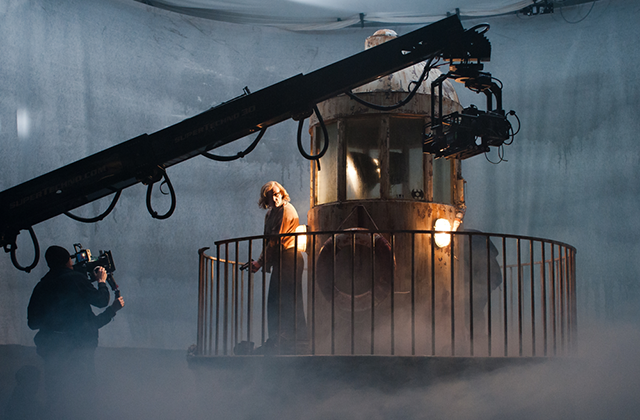
Films can be located anywhere; creating the visual world or setting for a film is the role of the Art Department. The look of sets or locations transports audiences into the world of the story, and is an essential element in making films convincing and evocative. These settings are rarely left to chance by film makers; a great deal of work and imagination goes into constructing appropriate backdrops to any story. The Art Department usually employs the largest number of people on any film crew. On big budget fantasy, period drama or sci-fi films, the Art Department Offices, and Drawing and Construction Studios can occupy a vast area and employ hundreds of talented people.
 Every department is important when creating a film - of any size, and departments have to be able to work together well to create a successful film. The director and his team of assistants will work with every department so they are able to know about how certain aspects of the film are coming along, for example talking to the actors and making sure they are happy or talking to the location manager and making sure a location is available to use on the needed date. The camera department will work with the sound department as they will need to organise with the boom operator where the boom will go when filming so that it is not in shot and also so that the sound department can get the best quality dialogue for the scene they are shooting. The camera department will also work with the lighting department to make sure the correct atmosphere is being portrayed onto the screen, this is important as the lighting is crucial whilst creating a certain genre. Camera and lighting come under the same department and because film is predominantly a visual medium, the camera department works with all the majority of departments in order to have the best possible results achieved, these departments include costume, make-up and props.
My group and I will be taking on some of the above job titles whilst filming, such as director, boom operator, editor, location manager, as well as a camera operator. The director of our short film will make sure every department is working well together and that the camera operator captures the necessary shots without allowing any continuity errors to happen. An editor will be needed to go through whatever footage the director shoots and edit it and put it together to create a powerful story. Someone will need to be the boom operator so we are able to make sure we have clear and good quality dialogue for our film. The location manager will make sure we have the correct place to film, they will also be responsible for keeping the filming to schedules and leaving the location the way we found it. There of course are more job roles that my group and I will need to take on such as creating our own art department and making sure the right costumes and props are used and remembered in the frames.
 Due to there only being four of us every member of my group will need to make sure they are able to take on large tasks on their own as there are a lot of jobs to do for just four people. By dividing up the jobs equally and working together we should hopefully avoid any delegation or low signs of progress from any member of our group. Good team work will be needed to create a successful short film and by playing on peoples strengths and by helping one another with improving our skill base we should hopefully create a really good short film.
Here are two links to different websites I found which useful when researching various roles within the media industry.
Job roles within the media industry.
Film Jobs
Director
The director has one of the main roles as they have to work with the different departments and they also help to translate the script to a film on screen. The typical activities of a director contain elements such as; interpreting the script; developing storyboards; directing actors; managing technical details; making decisions about location and design. Directors also have to take into consideration budgets and schedules.
The editor is responsible for assembling raw material into a finished product suitable for the target audience, this is one of the most crucial elements of film making. The material they work with may consist of unedited camera footage, dialogue, sound effects, graphics and special effects. During editing they make sure that the story is put together correctly which is then assembled to become the finished film. The editor may be part of a team and they usually work closely with the director to achieve the desired end result.
 Lighting
The lighting department is an important role as part of a film set and production. There is natural lightening such as the sun but artificial lighting is often required to create a specific genre or atmosphere within the film. To carry out a role in the lighting department all workers are required to work safely with electricity and all the other obvious potential dangers. Jobs within the sound department include; moving light operator, director of photography and lighting technician.

Boom Operator/ Sound Department
Recording all sound on set or on location is the work of the Production Sound Crew which includes Production Sound Mixers, Boom Operators, and Sound Assistants; on bigger films, Sound Trainees may also be employed. Although film is considered a primarily visual medium, much of the storytelling and emotional resonance of a script is conveyed through dialogue. Ensuring that the dialogue recorded during film shoots is suitably clear is a complex job; most film sets are challenging for the Sound Department as there are often unwanted noises to deal with, or the desired camera shots hamper the placing of microphones. Boom Operators are responsible for placing the microphone in the correct position were ever the best sound for the shot is. They need to do this without interrupting the camera operators or distracting the actors from their performance. The microphones are placed near the actors whilst they are saying their lines as clear dialogue is needed for film, making this a very important job. Boom Operators also assist the production sound mixer as these jobs work along side one another.
 Camera
Good cinematography involves the creation of beautiful and/or arresting images on screen; it can also tell us more about a character or a location than any amount of dialogue or music. Shot composition, camera movement and the way a Director of Photography chooses to manipulate light and shade, all combine to create each film's unique photographic signature. A great deal of thought, preparation and hard work is involved in moving and operating cameras in ways that enhance, and do not detract from, what is happening on screen. Camera crews work with extremely delicate, expensive equipment and are amongst the most highly skilled practitioners on any film crew. They work closely together to create seemingly invisible camera moves.

The location managers' main role is to find suitable locations for the directors vision. They do a lot of research including calculating the costs of hiring and shooting on the chosen set/location, this role starts once the filming has begun therefore it is busy for them as they have to be on the set to make sure the location is fine for the director. They also begin negotiations over contracts and fees for the location working within the budget the director gave them. They also have to look after the shoot once the filming has finished because they need to ensure that the location is securely locked as well as clean before they return it to the owners.
Producer
Producers are a main part of the production office, producers have overall control on every aspect of a film's production, bringing together the screenwriter, director, cast, finances and production team, as responsible for these different elements it means that producers are ultimately accountable for a successful film.
Art DepartmentFilms can be located anywhere; creating the visual world or setting for a film is the role of the Art Department. The look of sets or locations transports audiences into the world of the story, and is an essential element in making films convincing and evocative. These settings are rarely left to chance by film makers; a great deal of work and imagination goes into constructing appropriate backdrops to any story. The Art Department usually employs the largest number of people on any film crew. On big budget fantasy, period drama or sci-fi films, the Art Department Offices, and Drawing and Construction Studios can occupy a vast area and employ hundreds of talented people.
 Every department is important when creating a film - of any size, and departments have to be able to work together well to create a successful film. The director and his team of assistants will work with every department so they are able to know about how certain aspects of the film are coming along, for example talking to the actors and making sure they are happy or talking to the location manager and making sure a location is available to use on the needed date. The camera department will work with the sound department as they will need to organise with the boom operator where the boom will go when filming so that it is not in shot and also so that the sound department can get the best quality dialogue for the scene they are shooting. The camera department will also work with the lighting department to make sure the correct atmosphere is being portrayed onto the screen, this is important as the lighting is crucial whilst creating a certain genre. Camera and lighting come under the same department and because film is predominantly a visual medium, the camera department works with all the majority of departments in order to have the best possible results achieved, these departments include costume, make-up and props.
 Due to there only being four of us every member of my group will need to make sure they are able to take on large tasks on their own as there are a lot of jobs to do for just four people. By dividing up the jobs equally and working together we should hopefully avoid any delegation or low signs of progress from any member of our group. Good team work will be needed to create a successful short film and by playing on peoples strengths and by helping one another with improving our skill base we should hopefully create a really good short film.
Subscribe to:
Posts (Atom)